 9.3
9.3
Yiwu Better Culture
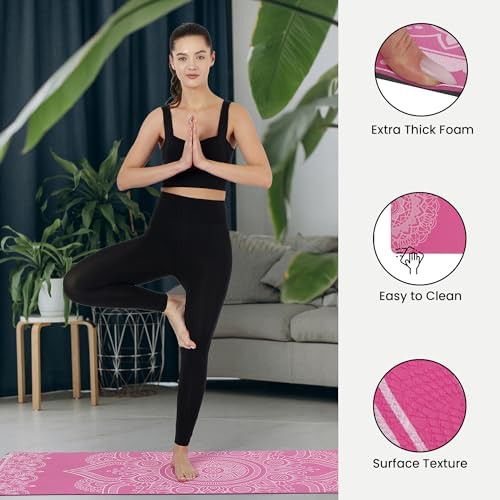
Amethyst lotus printed reversible yoga mat
$25
Men Non-slip Pilates mats Affordable 6mm Large 6'x4' exercise mats
Dual-sided mats offering different textures or colors for versatility 8 mats · 6 brands
9.3
Men Non-slip Pilates mats Affordable 6mm Large 6'x4' exercise mats
 9.1
9.1
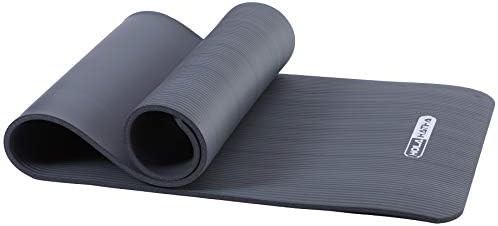
Black Non-slip Pilates mats Affordable Lightweight Home gym mats
 8.4
8.4
 8.4
8.4
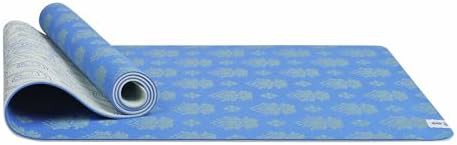
Blue Men Non-slip Pilates mats TPE Affordable
 7.9
7.9
Black Men Women Eco-friendly Travel
 7.8
7.8
Men Non-slip Pilates mats Affordable 6mm Large 6'x4' exercise mats
Non-slip Pilates mats Eco-friendly Home gym mats Natural rubber 5mm
Not always. Some reversible mats have a textured non-slip side and a smoother cushioned side, so grip differs by face. Others use the same grip texture on both sides and only change the color or print. Check which construction you are getting if grip on both faces matters to you.
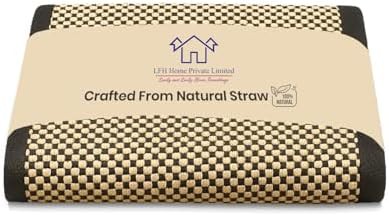
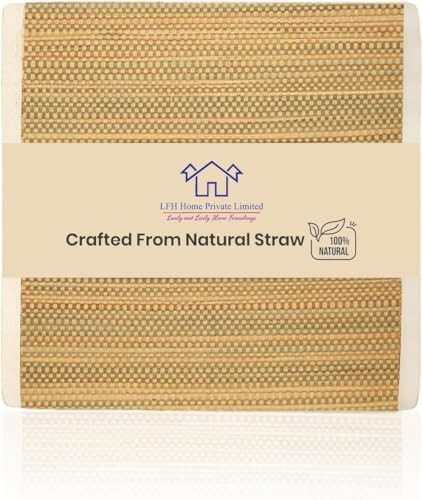
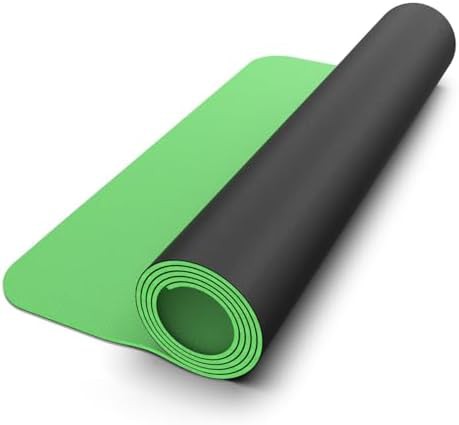
A rubber reversible mat with a dual-surface construction tends to stay put on low-pile carpet because the rubber grips the fibers. A straw mat is heavier and stiffer, so it lies flat but may shift on plush carpet. A 0.5-inch thick mat adds cushioning that helps on hard floors but can feel unstable on soft carpet.
The 1mm difference is small but noticeable: 5mm feels more grounded underfoot, while 6mm adds a bit more cushion for knees and wrists. For standing balance poses, the thinner mat gives more feedback from the floor. For floor work, the 6mm is the more forgiving choice.
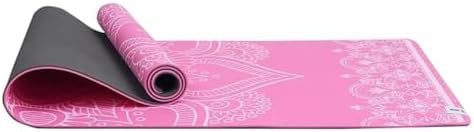
On printed reversible mats, the design sits on the surface layer, so repeated flipping and cleaning can dull it over time. Rinsing with water and air-drying rather than scrubbing helps preserve the print. Mats with a solid color on both sides avoid that concern entirely.
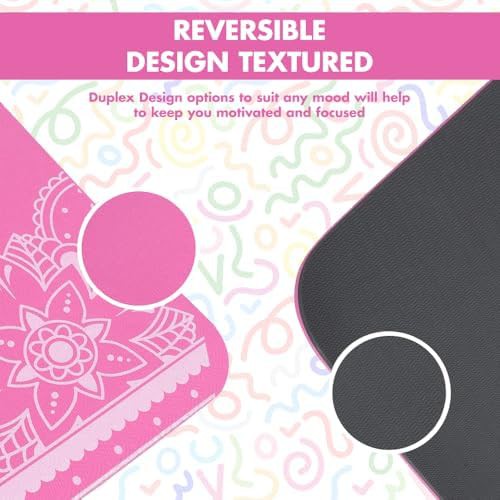
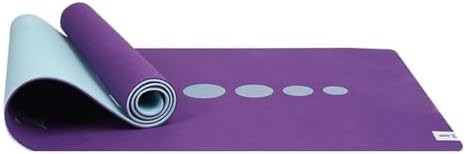
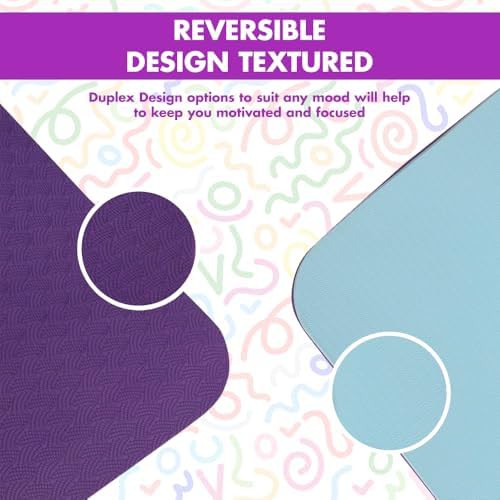
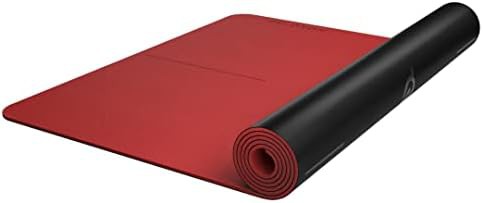
A reversible mat carries a different surface on each face, and the samples show that split taking two forms. Some mats pair a textured grip side with a smoother, more cushioned side, so you can flip based on whether you want traction or comfort. Others use the same grip texture on both faces but change the color or print, which lets you rotate the look without buying a second mat.
The practical benefit is that one mat covers more than one kind of session. A grippier side suits sweaty standing sequences, while a softer or smoother side works for seated stretches, core work, or lying flat. For home practice where the mat stays out, the reversible print also means the mat can match a room without being flipped face-down between uses.
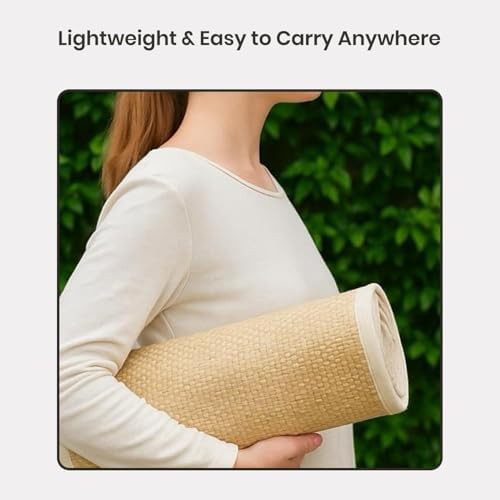
Reversible mats are made by bonding or laminating two layers, and the samples show this in both rubber and straw constructions. A dual-surface rubber mat uses two rubber faces joined into one body, which keeps the mat from sliding when you flip it mid-session. Straw reversible mats take a different route, weaving natural straw into a heavy, structured mat that holds its shape on the floor.
Thickness varies across the group: 5mm and 6mm are common for rubber versions, while a 0.5-inch mat offers a much plusher feel. The 6mm printed mats come in 72 by 24 inches, and the rubber dual-surface mat is listed at 26 by 71 inches. Prints include blue peacock, amethyst lotus, mandala bloom, and light pink, while the straw mats stay in white or black.